The Best Fluffy Pancakes recipe you will fall in love with. Full of tips and tricks to help you make the best pancakes.


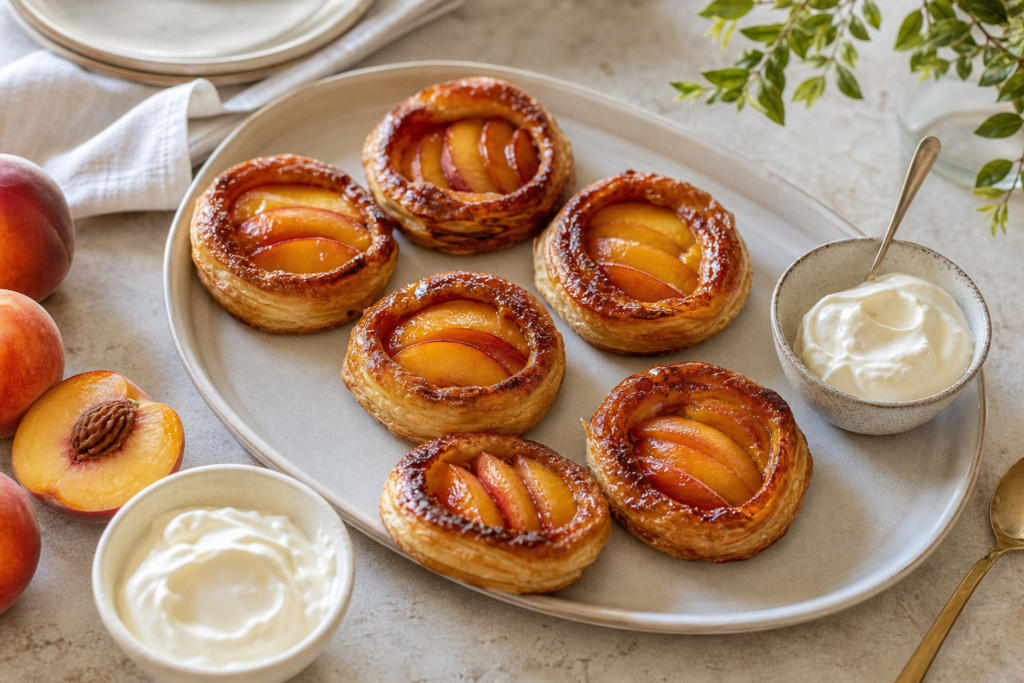
These individual peaches-and-cream upside-down tarts use a simple tarte Tatin-style method: peaches sit in butter caramel beneath chilled puff pastry, then the baked tarts are inverted so the glossy fruit rests on top of a crisp, golden base.
The recipe makes six 10cm tarts. Use ripe-but-firm peaches rather than very soft ones, keep the pastry cold, and turn the tarts out while the caramel is still fluid enough to release. Softly whipped cream adds a cool, lightly sweet contrast without competing with the fruit.
Why You’ll Love It
Why this method works
The peaches cook in the caramel as the pastry bakes, so there is no need to pre-cook the fruit. Arranging the peach wedges in a snug single layer limits the amount of exposed syrup and helps the pastry stay crisp rather than sitting in a pool of juice.
Puff pastry is the right choice here: its layers expand in the oven and provide a light, flaky contrast to the tender fruit. The pastry is cut slightly larger than the tins and tucked around the fruit, which helps contain the caramel while the tarts bake. Unlike a conventional cream tart, the cream is served separately and added only after the hot tarts have been inverted.
Recipe at a Glance
Prep: 30 min Cook: 30 min Total: 70 min Servings: 6 Difficulty: Intermediate
Individual puff-pastry upside-down tarts with butter caramel, tender peaches and softly whipped vanilla cream. The peaches bake beneath the pastry and are turned out while warm so the fruit sits on top.
Equipment
- Six 10cm round ovenproof tart tins, about 2cm deep
- Sturdy baking sheet
- Small light-coloured saucepan
- Heatproof spatula
- Rolling pin, if needed
- Pastry cutter or bowl about 11cm in diameter
- Thin blunt-edged knife
- Electric or balloon whisk
- Six serving plates
Ingredient Notes
Peaches: The exact number of wedges needed depends on peach size. Four medium peaches should provide enough fruit for six tins, with a small amount potentially left over. Choose fruit that is fragrant and slightly yielding but not soft.
Pastry: Use refrigerated or thawed store-bought puff pastry. Keep it cold while cutting and assembling. Shortcrust pastry is not a direct substitute because it bakes and puffs differently.
Butter and cream: Unsalted butter gives better control over the caramel. Double cream should be cold so it whips into soft, spoonable peaks. The butter and cream contain milk; packaged pastry may also contain wheat, milk or egg, so check the label.
Ingredients
- 100 g caster sugar
- 2 tablespoons water
- 50 g unsalted butter, cut into small pieces
- 4 medium ripe-but-firm peaches, about 600 g before preparation
- 320 g ready-rolled puff pastry, chilled
- 180 ml cold double cream
- 1 tablespoon icing sugar
- 1 teaspoon vanilla extract
How to Make It
- Heat the oven to 200°C conventional / 180°C fan and place a rack in the middle. Set six 10cm round, ovenproof tart tins on a sturdy baking sheet.
- Put the caster sugar and water in a small light-coloured saucepan. Heat over medium heat until the sugar dissolves, then cook without stirring until the syrup turns deep golden amber.
- Remove the saucepan from the heat. Carefully add the butter a little at a time, standing back from the steam and bubbling caramel. Stir with a heatproof spatula until combined.
- Divide the hot caramel between the six tins, using about 1 tablespoon per tin. Arrange the peach wedges in one snug layer over the caramel, curved side down and cut side up. Do not overlap the fruit.
- Cut six 11cm rounds from the chilled puff pastry. Lay one over each tin, tuck the edges around the peaches, and cut two small slits in the centre of each pastry round.
- Chill the filled tins for 15 minutes. Bake for 25–30 minutes, until the pastry is puffed and deeply golden, the caramel is bubbling, and the peaches are tender when pierced with a thin knife.
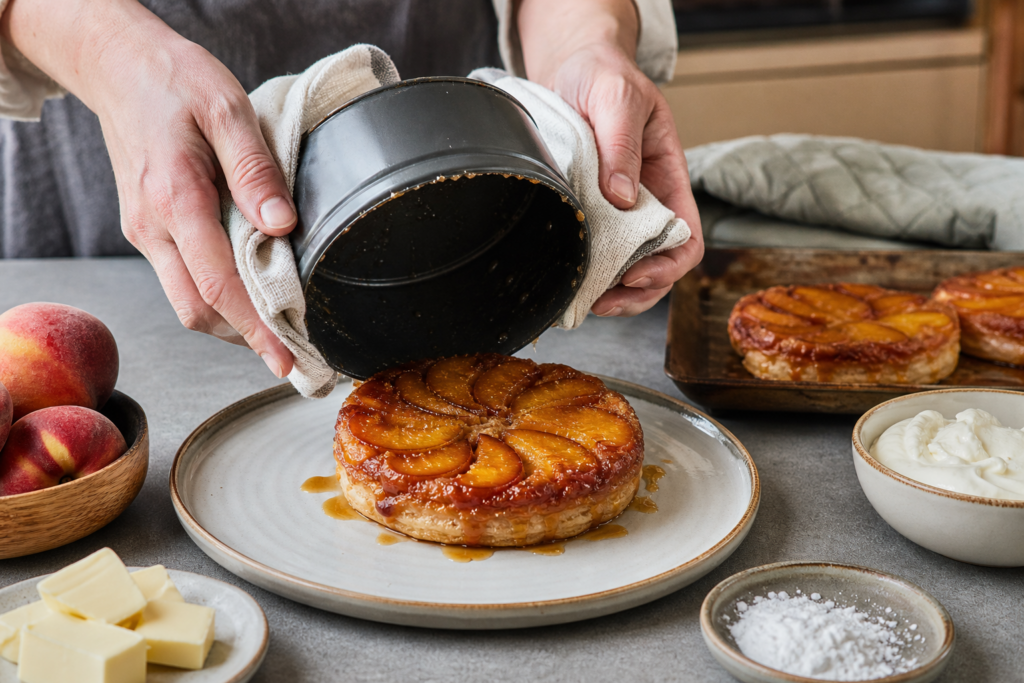
- Cool the tarts in their tins for 5 minutes. Wearing oven mitts, loosen the edges with a thin blunt-edged knife, place a serving plate over each tin, and invert in one controlled motion. Lift away the tin and replace any fruit that remains behind.
- Whip the cold double cream, icing sugar and vanilla until soft peaks form. Serve the warm or slightly cooled tarts with the cream alongside.
Recipe at a glance
- Yield: 6 individual tarts
- Pan: six 10cm round, ovenproof tart tins, ideally about 2cm deep
- Active preparation: about 30 minutes
- Total time: about 1 hour 10 minutes, including chilling and cooling
- Best served: warm or slightly cooled, with cream added at the table
Choose and prepare the peaches
Choose peaches that give slightly when pressed but are still firm enough to cut cleanly. Very soft peaches release more juice and can collapse during baking, making the pastry softer. Underripe peaches may keep their shape but will have less aroma and can remain firm after the stated baking time.
Peeling is optional, but peeled peaches give the neatest, most tender result. To peel them, cut a shallow cross in the base of each peach, place them in boiling water for about 30 seconds, then transfer them to cold water. The skins should loosen enough to pull away. Halve the peaches, remove the stones, and cut each half into four wedges about 2cm thick. If the skins come away easily without blanching, you can peel the peaches directly with a small knife.
Make the caramel and arrange the fruit
Heat the oven to 200°C conventional / 180°C fan. Put a rack in the middle position. Set out six heatproof tart tins on a sturdy baking sheet; the sheet makes moving the filled tins easier and catches any small drips.
Put the caster sugar and water in a small, light-coloured saucepan. Warm over medium heat until the sugar dissolves, then continue cooking without stirring until the syrup turns a deep golden amber. Swirl the pan gently if the colour is uneven. Take it off the heat and carefully add the butter in small pieces. Stand back because the mixture may bubble and splatter. Stir with a heatproof spatula until the butter is incorporated.
Divide the hot caramel between the six tins, using roughly 1 tablespoon in each. Work carefully and keep your hands and face away from the syrup. Arrange the peach wedges in the caramel in a single, snug layer, with the curved side down and the cut side facing up toward the pastry. Avoid piling the fruit or leaving large gaps; both make the finished tarts more likely to cook unevenly. Depending on the size of the peaches, you may have a few wedges left over.
Prepare and add the pastry
Unroll the puff pastry while it is cold but flexible. Cut six rounds about 11cm in diameter, giving each round approximately 1cm of overhang around a 10cm tin. Keep the pastry rounds on a lined plate or tray in the refrigerator while you assemble the tarts if the kitchen is warm.
Lay one pastry round over each group of peaches. Tuck the edges down around the fruit so the pastry sits inside the rim rather than hanging loosely over the outside. Press gently to remove obvious air pockets, but do not compress the layers. Cut two small slits in the centre of each pastry round to let steam escape. Do not prick the pastry all over, since that would reduce its lift. There is no need for an egg wash because the visible pastry surface is underneath the tart during baking.
Chill the filled tins for 15 minutes. This firms the butter in the pastry and helps the layers puff before the caramel and peach juices can soak into them.
Bake the tarts
Bake for 25–30 minutes, or until the pastry is visibly puffed and deeply golden and the caramel is bubbling around the fruit. The peaches should feel tender when pierced with a thin knife, but they should still hold their shape. If the pastry is browning quickly while the fruit remains firm, lower the oven to 190°C conventional / 170°C fan and continue baking until tender.
Dark metal tins may brown the pastry faster than pale metal tins. Ceramic or glass vessels can take longer to heat, so use the colour of the pastry and the tenderness of the peaches as the final indicators rather than relying on the clock alone.
Invert while warm
Let the tarts stand for 5 minutes after removing them from the oven. This gives the bubbling caramel a moment to settle, but it should still be fluid. Waiting much longer can allow the caramel to set and stick.
Put on oven mitts. Run a thin, blunt-edged knife around the inside rim of one tin, keeping the blade close to the metal. Place a serving plate upside down over the tin, hold the plate and tin together, and turn them over in one controlled motion. Lift the tin carefully. Repeat with the remaining tarts.
If a peach or a little caramel remains in the tin, lift it out with a small spatula and place it back on the tart. Do not handle the caramel with bare fingers; it remains extremely hot even after the tarts leave the oven. Allow the inverted tarts to cool for several minutes before eating.
Prepare the cream
Pour the cold double cream into a chilled bowl. Add the icing sugar and vanilla extract, then whisk until it forms soft peaks: the cream should hold a gentle mound but still look smooth and spoonable. Stop before it becomes stiff or grainy.
Serve about 2 tablespoons of cream with each tart. For a sharper accompaniment, replace the whipped cream with lightly sweetened crème fraîche. Mascarpone whipped with a little cream makes a thicker option, while plain pouring cream keeps the dessert less sweet.
Practical Tips
Tips for crisp pastry and clean release
- Keep the fruit quantity restrained. Fill each tin with one snug layer rather than adding extra peach wedges on top. Excess fruit releases more juice and can steam the pastry.
- Use a pale saucepan for caramel if possible. It makes the colour easier to judge. Remove the sugar from the heat at deep amber; it will continue darkening briefly in the hot pan.
- Do not stir boiling caramel. Stirring can encourage crystallisation. Swirling the saucepan gently is enough to distribute the heat.
- Chill the pastry before baking. Warm puff pastry is more likely to shrink, leak butter and bake flat.
- Use a baking sheet under the tins. It provides support and catches caramel that bubbles over.
- Invert on individual plates. A wide plate gives you room to centre the tart and reduces the chance of hot syrup running onto your hand.
Troubleshooting
- Caramel darkens too quickly: the heat is too high. Remove the pan from the burner and let the residual heat finish the colour, then add the butter cautiously.
- There is a pool of liquid: the peaches were particularly ripe or the tins were overcrowded. Bake until the pastry is properly browned; next time use firmer fruit and a single layer.
- The pastry is pale or soggy underneath: the tarts may be underbaked, or the pastry may have been warm when assembled. Continue baking until deeply golden and chill the assembled tarts before they go into the oven.
- The pastry has not puffed: it may have been compressed while being tucked in, or the butter softened before baking. Handle it lightly and chill the filled tins.
- A tart sticks: loosen the edges while it is still warm. If the caramel has set, place the tin over low heat for a few seconds to soften it, then try inverting again with oven mitts.
- The tart breaks apart: the fruit may have been piled too high, or the pastry was not tucked securely around the edges. Reassemble any loose peach pieces on the plate and serve with cream; the flavour will remain good even if the shape is imperfect.
Ingredient Substitutions
Substitutions
- Nectarines: Use in the same quantity. The skins can remain on, and the fruit should still be ripe but firm.
- Other stone fruit: Firm plums or apricots can work, but their size, acidity and moisture vary. Cut them into pieces that fit in one layer and begin checking for tenderness early.
- Pastry: This recipe is written for refrigerated or thawed store-bought puff pastry, not shortcrust pastry. Shortcrust will produce a denser, more crumbly tart and needs a separately adjusted method and baking time.
- Canned peaches: Drain them very thoroughly and pat them dry. Use peaches packed in juice rather than retaining the syrup. They are already soft, so arrange them gently and expect a softer fruit layer.
- Frozen peaches: Thaw completely in a sieve, drain well and pat dry. They release more water than fresh peaches and may make the pastry less crisp.
- Dairy-free: A plant-based block suitable for baking can replace the butter, and a plant-based whipping cream can replace the double cream if it is designed to whip. Check the labels, since melting, caramel behaviour and whipping ability differ among products.
One large tart
A large peach tarte Tatin is a separate format rather than a simple multiplication of this recipe. Use a 23cm ovenproof skillet or round tart dish, arrange the peaches in a tight pattern, and cover them with one pastry round slightly larger than the pan. The fruit depth, pan material and amount of trapped juice will change the baking time, so bake until the pastry is deeply golden and the peaches are tender rather than transferring the individual-tart timing unchanged. Invert onto a large rimmed plate while warm, using particular care with the larger volume of hot caramel.
Easy Variations
Variations
For a less sweet finish, add a little finely grated lemon zest to the cream instead of increasing the vanilla. A small pinch of ground cardamom or cinnamon can be added to the caramel, although the peaches and cream are the main flavours. A few fresh thyme leaves or a narrow strip of lemon zest can be used as a restrained garnish just before serving.
For a more pronounced contrast, serve the warm tarts with crème fraîche rather than whipped cream. If using mascarpone, keep it lightly sweetened and soften it with a spoonful of cream so it can be spooned easily alongside the pastry.
Storage & Serving Suggestions
Storage and serving
These tarts are crispest shortly after baking. Serve them warm or slightly cooled, with the cream made separately and added just before eating. Let the caramel cool briefly before serving; hot syrup can burn the mouth.
Refrigerate leftover tarts in a covered container and use them within 2 days. Store the cream separately in the refrigerator and use it within the date indicated on the cream, or within 2 days of whipping if that is sooner. Refrigeration softens puff pastry, but the tarts can be reheated on a baking sheet at 180°C conventional / 160°C fan for 8–12 minutes, until warmed through. Do not reheat the cream, and do not microwave the tarts because the pastry is likely to become soft and the caramel can heat unevenly.
Do not leave the cream or baked tarts at room temperature for an extended period, particularly in a warm kitchen. The recipe is not intended for room-temperature storage or shelf-stable preservation.
Frequently asked questions
Are these individual tarts or one large tart?
This recipe makes six individual 10cm upside-down tarts. A large-format adaptation is possible, but it needs a suitable ovenproof pan and its own timing checks.
Is this a peach tarte Tatin?
It uses the same basic upside-down technique as a tarte Tatin: fruit and caramel bake beneath pastry, then the tart is inverted. The individual portions and puff pastry make the format different from a single traditional tart.
Should peaches be peeled?
Peeling is recommended for the smoothest texture and cleanest appearance, but it is not essential. Nectarines can be used with their skins on.
Why does the pastry need to be chilled?
Cold pastry gives the butter in the layers a better chance to expand in the oven. It also makes the pastry less likely to shrink or leak butter before it has puffed.
Can I prepare the tarts ahead?
The peaches can be cut and the pastry rounds can be prepared a few hours ahead, kept covered and chilled separately. Assemble the tarts shortly before baking so the pastry does not absorb moisture from the fruit and caramel.
What if the caramel sticks?
Try to invert the tarts after about 5 minutes of cooling, while the caramel remains fluid. If it has set, warm the base of the tin over low heat for a few seconds, then loosen the edge and invert again. Use oven mitts throughout.
What allergens are present?
Store-bought puff pastry commonly contains wheat and may contain milk or egg; the butter and cream contain milk. Check the packaging for the exact ingredients and cross-contact warnings. A dairy-free or gluten-free product is not automatically safe for an allergy; labels and preparation surfaces must also be suitable.